Monday
After having breakfast, you will see a presentation about the Turtle Conservation project and also receive a project briefing which will help you to understand the dos and don’ts of the project. After that you will engage in the typical activities you are supposed to do throughout the week such as feeding the turtles, cleaning the tanks, catching live food for turtles, and also cleaning the beach. In the evening, you will then see a documentary about Turtles which will help you to widen your knowledge about these amazing creatures.
Tuesday
After having breakfast on Tuesday, you will start cleaning the tanks, feeding the turtles, and collecting seaweed and live food for turtles. In addition, you will also create turtle toys, clean the beach and provide medicine for injured turtles if there are any.
Wednesday
After having breakfast on Wednesday, you will start cleaning the tanks, feeding the turtles, and collecting seaweed and live food for turtles. In addition, you will also create turtle toys and provide medicine for injured turtles if there are any.
In the evening, you will then engage in some sports activities at the beach where you will play either volleyball, badminton, or football.
Thursday
On Thursday, you will have breakfast and start cleaning tanks, feeding the turtles, and collecting seaweed. you will also create turtle toys and provide medicine for injured turtles if there are any.
On either Tuesday, Wednesday, or Thursday you will visit an amazing location called Crystal Bay which has a breathtaking view. Your local coordinators will decide the day on which you visit this exotic location.
Thursday night will be a special one for you to enjoy the welcome and farewell dinner by a Bonfire at the beach. This would be a great opportunity to get to know the newcomers and say goodbye to those who are leaving.
Friday
On Friday, after having breakfast, you will feed the turtles and get an amazing opportunity to release turtles into the sea. But please do understand that this opportunity is only if you are leaving the program this week. If you continue another week at the project, you will engage in regular activities at the turtle conservation centre. For those who are leaving the program, there would also be a feedback session regarding the program. After having lunch, you all can engage in activities such as feeding the turtles, cleaning tanks, and measuring the turtle growth.
Other activities you would engage are as below:
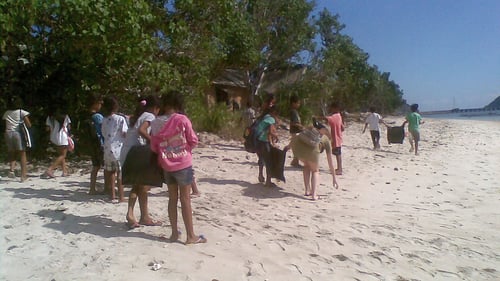
Cleaning the beach
Making garbage bins for the local area
Creating a Turtles/Environment campaign for the local area
Releasing injured turtles after treatment and clean private beach
Turtles site construction work: such as extra turtle tank or wall, painting the walls etc.
Collecting turtle information such as length of carapace, size of flippers, checking its weight etc.
Please note that the volunteer activities and schedule can change at any time based on the needs of the project, local conditions, the weather and unforeseen circumstances. In Bali, nesting season for sea turtles will be from May until October, year after year.
Normally, if the participants attend the program out of the nesting season, they will join the activities below:
The participants are required to clean the turtle tanks, scrub turtles, fillet and cut fish for turtle, feed turtles, collect crabs, clean the community area (beach, village), create awareness signboards to save the environment and turtles, make turtle toys, collect turtle information such as length of carapace, size of flippers, check its weight, etc. and release the turtles.
We treat them until they are strong enough to survive in the ocean and release it afterward. Because if we release them when they are very young, once they make it to the ocean, many of these young sea turtles rely on floating seaweed mats, called Sargassum, to hide from predators. It means the ocean is unsafe for them when they are too young. Moreover, we can not release them as soon as they hatch because they can not dive in the deep ocean and they can not find food for themselves. They have to eat whatever food is floating in the ocean. The sea turtles' favorite food is jellyfish. But a floating, clear plastic bag can look an awful lot like a jellyfish dinner. When sea turtles consume marine debris by mistake, it can get stuck in their stomachs and cause major damage.
All sea turtles are affected by ocean trash, by mistaking the trash for food, getting a flipper caught in a discarded six-pack ring or being unable to surface for air while accidentally stuck in a fishing net. For every sea turtle that hatches, only one out of 100 will survive to adulthood.
Furthermore, not only is a hatchery maintained in the center, but we also rescue turtles which are stuck in the fishnets or elsewhere. We treat them until they recover and then we release them.
Nesting Season is from May - October.
Hatching Season - The time period for the hatching or the incubation time is generally 60 days. However, depending on the weather conditions, the temperature of the sand the process time period can vary. Usually according to our experience, it will be between 45 to 75 days. However we cannot guarantee the time the eggs will hatch.Then, we need to feed and treat them until they are strong enough (up to 8-12 months) and we will release them to survive in the ocean.
Participants not attending any program the following week are required to check out of their accommodation during the day on Saturday.
***This schedule can be changed and/or amended depending on weather conditions, local conditions and unforeseen circumstances. ***
Vi fandt {{ category.count + ' ' + (category.count == 1? category.label:category.pluralLabel) }} og {{ category.count + ' ' + (category.count == 1? category.label:category.pluralLabel) }} for '{{ searchTerm }}'
0 Results found
Søg efter destinationer, aktiviteter, rejseforslag, etc...
Vi fandt {{ category.count + ' ' + (category.count == 1? category.label:category.pluralLabel) }} og {{ category.count + ' ' + (category.count == 1? category.label:category.pluralLabel) }} for '{{ searchTerm }}'
0 Results found
{{ cardLists.others.label }}
Support
{{ cardSlider.label }}
Support

Kan du stadig ikke finde det, du leder efter?
Hvis du har brug for hjælp, så skriv til os!
Itinerary
Bali - Turtle Project
Weekly Schedule & Activities
Optional Culture Week
This program can also include a Culture Week which is highly recommended but not mandatory - just inform your travel advisor if you wish to include it. Indonesia is one of the most interesting countries in the world for cultural learning and experiences, which means that this week is packed full of exciting adventures, cultural excursions and interactions.
During the Culture Week, you will be participating in various activities and will get acquainted with the Balinese culture, study the Balinese language and explore Ubud and its beautiful surrounding areas. Through this week you will experience a traditional Balinese show and challenge your artistic and creative side through traditional Batik Painting and also try out your skills as a cook with a traditional Balinese cooking class. Finally, you will make a traditional flower offering and offer your creation at one of the most impressive Balinese temples: The Holy Tirta Empul Temple. At this temple, you will also have the opportunity to immerse yourself in Holy Water and pray for good luck. Evenings during the Culture Week and the weekend after are free unless otherwise mentioned.
During the Culture Week, you will be participating in various activities and will get acquainted with the Balinese culture, study the Balinese language and explore Ubud and its beautiful surrounding areas. Through this week you will experience a traditional Balinese show and challenge your artistic and creative side through traditional Batik Painting and also try out your skills as a cook with a traditional Balinese cooking class. Finally, you will make a traditional flower offering and offer your creation at one of the most impressive Balinese temples: The Holy Tirta Empul Temple. At this temple, you will also have the opportunity to immerse yourself in Holy Water and pray for good luck. Evenings during the Culture Week and the weekend after are free unless otherwise mentioned.
Public Holidays
** Day of Silence (Nyepi) is a Hindu ceremony reserved for self-reflection. This takes place from 06:00 on 19 March until 06:00 on 20 March 2026. On Nyepi Day, the project as well as the airport, shops and businesses are closed, and everyone must stay at home. The day before Nyepi you will take part in the preparations and the day after there is a ceremony in the morning. If participants will arrive to Bali on 19 March, we recommend them to arrive before 15:00 or after 23:00 because everywhere on the island, there will be Ogoh Ogoh parades and ceremonies from 15:00-23:00. There will be heavy traffic and closed roads.
Mandatory Volunteer Requirements
Social Visa C6B
Minimum age of 18
Basic level of competency in English
Original Police clearance certificate on arrival - issued no more than 6 months before arrival
Passport copy required on arrival
Copy of Travel & medical insurance on arrival
Agree to house center rules and rules of conduct (sign on arrival)
Using sunscreen, or any kind of lotions and mosquito repellents, are not allowed to be used during all our turtle conservation projects.
Minimum age of 18
Basic level of competency in English
Original Police clearance certificate on arrival - issued no more than 6 months before arrival
Passport copy required on arrival
Copy of Travel & medical insurance on arrival
Agree to house center rules and rules of conduct (sign on arrival)
Using sunscreen, or any kind of lotions and mosquito repellents, are not allowed to be used during all our turtle conservation projects.
What Makes a Good Volunteer?
Volunteers need to be flexible and keep an open mind concerning their placements as situations can arise beyond our control which could require you to be placed at a different project than the one you have initially chosen. We will of course always do our utmost to fulfill your initial wishes but do remember that where you are going is quite different from where you are coming and as such one should be prepared for things not always going according to plan.
Volunteering and intercultural travel share a common trait: the more you put into it, the more you get out of it. This program is designed for proactive individuals and groups that are prepared to adapt to the local environment and its current needs. Naturally, the scheduling and activities of our program are subject to change. Alterations in activities are mainly due to changes in local conditions, which we believe is part of what makes overseas programs the interesting adventure and incredible learning experience that they are.
Volunteering and intercultural travel share a common trait: the more you put into it, the more you get out of it. This program is designed for proactive individuals and groups that are prepared to adapt to the local environment and its current needs. Naturally, the scheduling and activities of our program are subject to change. Alterations in activities are mainly due to changes in local conditions, which we believe is part of what makes overseas programs the interesting adventure and incredible learning experience that they are.
How Long Should I Volunteer?
Our projects range from 1 week up to approx. 30 weeks. Projects have a specified minimum stay, then it's up to you how long you can commit. In our experience the longer you stay the more you will gain, as your understanding of the project broadens and you take on more responsibilities. Every volunteer will be given a certificate of appreciation at the end of their stay as a symbol of volunteering stay.
Oversigt
What’s included?
Activities
Sights & Surroundings
Since weekends are free, you have the opportunity to explore Bali at your own pace. Below are some recommended destinations:
Around Nusa Penida - There are many tourist hotspots on the island and it is also a must-visit for snorkeling and diving enthusiasts.
Nusa Lembongan - A peaceful island paradise with some of the clearest waters in the region. Perfect for surfing, diving, snorkeling, and total relaxation.
The Gili Islands - A group of three small islands off Lombok, known for their laid-back atmosphere, beautiful beaches, and excellent diving/snorkeling spots.
Ubud - The cultural and artistic heart of Bali, surrounded by lush rice terraces, dense forests, and traditional villages. It’s known for its Balinese dance performances, art galleries, craft markets, and wellness retreats. Popular attractions include the Sacred Monkey Forest Sanctuary, ancient temples, and yoga retreats.
Lovina - Nestled between the Bedugul mountains and the sea, Lovina is famous for dolphin watching, trekking, hot springs, and stunning coral reefs.
Sanur - A tranquil beach destination in Southeast Bali, lined with villa resorts. Historically, it played a role in both the Dutch invasion of 1906 and World War II as a strategic entry point.
Kuta - A lively beach area known for surfing, shopping malls, and a vibrant nightlife scene.
Canggu - A trendy coastal village with great surf beaches, stylish cafes, local markets, and a laid-back atmosphere.
Seminyak - A more upscale beach resort area offering luxury shopping, fine dining, and high-end nightlife, along with boutique hotels and wellness spas.
Uluwatu - Home to the famous Uluwatu Temple, perched on a dramatic 70-meter cliff overlooking the ocean. The area is also known for its stunning sunsets and surfing spots.
Since weekends are free, you have the opportunity to explore Bali at your own pace. Below are some recommended destinations:
Around Nusa Penida - There are many tourist hotspots on the island and it is also a must-visit for snorkeling and diving enthusiasts.
Nusa Lembongan - A peaceful island paradise with some of the clearest waters in the region. Perfect for surfing, diving, snorkeling, and total relaxation.
The Gili Islands - A group of three small islands off Lombok, known for their laid-back atmosphere, beautiful beaches, and excellent diving/snorkeling spots.
Ubud - The cultural and artistic heart of Bali, surrounded by lush rice terraces, dense forests, and traditional villages. It’s known for its Balinese dance performances, art galleries, craft markets, and wellness retreats. Popular attractions include the Sacred Monkey Forest Sanctuary, ancient temples, and yoga retreats.
Lovina - Nestled between the Bedugul mountains and the sea, Lovina is famous for dolphin watching, trekking, hot springs, and stunning coral reefs.
Sanur - A tranquil beach destination in Southeast Bali, lined with villa resorts. Historically, it played a role in both the Dutch invasion of 1906 and World War II as a strategic entry point.
Kuta - A lively beach area known for surfing, shopping malls, and a vibrant nightlife scene.
Canggu - A trendy coastal village with great surf beaches, stylish cafes, local markets, and a laid-back atmosphere.
Seminyak - A more upscale beach resort area offering luxury shopping, fine dining, and high-end nightlife, along with boutique hotels and wellness spas.
Uluwatu - Home to the famous Uluwatu Temple, perched on a dramatic 70-meter cliff overlooking the ocean. The area is also known for its stunning sunsets and surfing spots.
Accommodation
About the Accommodation
Our Jasmine Accommodation Center in Nusa Penida is conveniently located just a 10-minute walk from Banjar Nyuh Harbor. We provide shared gender-segregated rooms equipped with air-conditioning, hot showers, WiFi, and lockers for participants’ comfort. There are relaxing common areas with ample space to interact and unwind. The swimming pool is available in our accommodation center from 09:00 - 17:00. Additionally, our on-site office is available to assist participants whenever needed.
We provide all basic facilities at the volunteer house which includes shared bathrooms with hot water shower and western toilets. You can expect to share a room with 4-6 other volunteers of the same gender. The air-conditioned rooms are lockable, and bed linens are provided. Please bring your own towels. There is WiFi available in public areas at the volunteer accommodation, however, the connection is unreliable so we recommend purchasing a SIM card with data for an unlocked mobile before starting work at the project. Private rooms are available subject to availability - please ask your Travel advisor for more details.
All participants are expected to be environmentally responsible and to use all resources with restraint, especially water, paper and electricity. You will be expected to clean up after yourself, and to play your part to keep the accommodation neat and tidy.
Important Note: Alcohol consumption is strictly prohibited in our accommodation center.
Our Jasmine Accommodation Center in Nusa Penida is conveniently located just a 10-minute walk from Banjar Nyuh Harbor. We provide shared gender-segregated rooms equipped with air-conditioning, hot showers, WiFi, and lockers for participants’ comfort. There are relaxing common areas with ample space to interact and unwind. The swimming pool is available in our accommodation center from 09:00 - 17:00. Additionally, our on-site office is available to assist participants whenever needed.
We provide all basic facilities at the volunteer house which includes shared bathrooms with hot water shower and western toilets. You can expect to share a room with 4-6 other volunteers of the same gender. The air-conditioned rooms are lockable, and bed linens are provided. Please bring your own towels. There is WiFi available in public areas at the volunteer accommodation, however, the connection is unreliable so we recommend purchasing a SIM card with data for an unlocked mobile before starting work at the project. Private rooms are available subject to availability - please ask your Travel advisor for more details.
All participants are expected to be environmentally responsible and to use all resources with restraint, especially water, paper and electricity. You will be expected to clean up after yourself, and to play your part to keep the accommodation neat and tidy.
Important Note: Alcohol consumption is strictly prohibited in our accommodation center.
Local transport
Arrival Information
If this program is your first program, upon arrival you will be directly transferred to your accommodation in Nusa Penida.
A free transfer from the airport to Nusa Penida is available on Sunday only, if your flight arrives between 06:00-12:00. You may need to wait for several participants to arrive before the group leaves the airport.
Or if you arrive by land on Sunday, the meeting point is Bintang supermarket in Ubud at 13.00 or Sanur Harbour at 14:30. If you arrive earlier or later than this, you will be required to make your own way to the accommodation in Nusa Penida at your own cost. The project is located on the island of Nusa Penida which is a 45-minute speedboat ride from Bali. The last speedboat to Nusa Penida on Sunday is at 15.00.
If you arrive later than 13:00 on Sunday, you have to arrange accommodation near Sanur harbour (Jl. Sanur Beach Street Walk, Sanur) (at own cost) and get a boat to Nusa Penida the following day. If requested, we can pick you up from the airport until 20:00 and drop you off at your accommodation on Sunday.
If you take the ferry on Monday you will not be able to attend the orientation on Monday morning with all the other new arrivals, so we highly recommend getting a light that arrives in time for the transfer on Sunday
If you are taking a Culture Week, you can arrive at any time on Sunday and will be transferred to your accommodation, at the end of the Culture Week you will receive a transfer to the project on Nusa Penida.
REMEMBER: You must inform us of any flight changes or emergencies as soon as possible. ***DO NOT LEAVE THE MEETING POINT, DO NOT ATTEMPT TO TRAVEL TO OUR CENTER ON YOUR OWN.***
Transfer Coordinator: +62 (0) 821 446 34202
Getting to the Project on Nusa Penida
It takes 5 mins to walk to the project from your accommodation.
Departure Information
The latest check-out time from the accommodation on the last Saturday is 11:00. Departure transfer is not included as due to the many different personal plans and return flight times, it's logistically simpler for you to make your own way. Our coordinator can help you with the different transportation options, but you will have to cover the cost.
***Transportation after the Turtle Conservation project to other project locations should be arranged by yourself.***
If this program is your first program, upon arrival you will be directly transferred to your accommodation in Nusa Penida.
A free transfer from the airport to Nusa Penida is available on Sunday only, if your flight arrives between 06:00-12:00. You may need to wait for several participants to arrive before the group leaves the airport.
Or if you arrive by land on Sunday, the meeting point is Bintang supermarket in Ubud at 13.00 or Sanur Harbour at 14:30. If you arrive earlier or later than this, you will be required to make your own way to the accommodation in Nusa Penida at your own cost. The project is located on the island of Nusa Penida which is a 45-minute speedboat ride from Bali. The last speedboat to Nusa Penida on Sunday is at 15.00.
If you arrive later than 13:00 on Sunday, you have to arrange accommodation near Sanur harbour (Jl. Sanur Beach Street Walk, Sanur) (at own cost) and get a boat to Nusa Penida the following day. If requested, we can pick you up from the airport until 20:00 and drop you off at your accommodation on Sunday.
If you take the ferry on Monday you will not be able to attend the orientation on Monday morning with all the other new arrivals, so we highly recommend getting a light that arrives in time for the transfer on Sunday
If you are taking a Culture Week, you can arrive at any time on Sunday and will be transferred to your accommodation, at the end of the Culture Week you will receive a transfer to the project on Nusa Penida.
REMEMBER: You must inform us of any flight changes or emergencies as soon as possible. ***DO NOT LEAVE THE MEETING POINT, DO NOT ATTEMPT TO TRAVEL TO OUR CENTER ON YOUR OWN.***
Transfer Coordinator: +62 (0) 821 446 34202
Getting to the Project on Nusa Penida
It takes 5 mins to walk to the project from your accommodation.
Departure Information
The latest check-out time from the accommodation on the last Saturday is 11:00. Departure transfer is not included as due to the many different personal plans and return flight times, it's logistically simpler for you to make your own way. Our coordinator can help you with the different transportation options, but you will have to cover the cost.
***Transportation after the Turtle Conservation project to other project locations should be arranged by yourself.***
Meals
3 meals during weekday are provided (breakfast, lunch, dinner) and 2 meals during the weekend (breakfast, dinner).
Indonesian food is tasty and diverse and you can expect to experience a myriad of flavors and meals during their stay. Typical dishes included mie goreng (fried noodles and vegetables), nasi goreng (fried rice and vegetables) or gado gado (mixed vegetables with a satay sauce). For those who do not eat meat, Indonesian cooking uses a lot of tofu and tempeh (soybeans), we also provide for some of western dishes. Breakfasts are varied and include pancakes, fresh fruit, toast etc. Tea, coffee and purified water is available at the house. We do not recommend that you drink the tap water.
Please inform us of any dietary restrictions or intolerances during your application. However, we need to stress the point that you should not expect to eat as you normally do at home. We will do our best to see that you are well taken care of, but also as a volunteer, there is a need to be flexible and accommodating to the local food.
Restaurants and Cafes
There are several cafes in the village, where you can relax and hang out with other participants in your spare time. If you prefer to eat out occasionally (at own cost), there is a wide selection of restaurants with high standards of both international and local cuisine. It takes 5-20 minutes to walk.
Indonesian food is tasty and diverse and you can expect to experience a myriad of flavors and meals during their stay. Typical dishes included mie goreng (fried noodles and vegetables), nasi goreng (fried rice and vegetables) or gado gado (mixed vegetables with a satay sauce). For those who do not eat meat, Indonesian cooking uses a lot of tofu and tempeh (soybeans), we also provide for some of western dishes. Breakfasts are varied and include pancakes, fresh fruit, toast etc. Tea, coffee and purified water is available at the house. We do not recommend that you drink the tap water.
Please inform us of any dietary restrictions or intolerances during your application. However, we need to stress the point that you should not expect to eat as you normally do at home. We will do our best to see that you are well taken care of, but also as a volunteer, there is a need to be flexible and accommodating to the local food.
Restaurants and Cafes
There are several cafes in the village, where you can relax and hang out with other participants in your spare time. If you prefer to eat out occasionally (at own cost), there is a wide selection of restaurants with high standards of both international and local cuisine. It takes 5-20 minutes to walk.
Additional info
ATMs
There are many ATM's in the center of Nusa Penida which is 20 minutes by car from the house. The ATM accepts ONLY Master Card. It does NOT accept Visa.
Internet Access
We have Wi-Fi at the volunteer house (however, the signal strength varies and is not very fast).
Local SIM Card
We highly recommend buying a cheap local SIM card for your stay in Indonesia for your own personal safety and for easier/cheaper communication with the staff and other participants. A SIM card is especially useful if you are traveling to the project on your own.
There are many ATM's in the center of Nusa Penida which is 20 minutes by car from the house. The ATM accepts ONLY Master Card. It does NOT accept Visa.
Internet Access
We have Wi-Fi at the volunteer house (however, the signal strength varies and is not very fast).
Local SIM Card
We highly recommend buying a cheap local SIM card for your stay in Indonesia for your own personal safety and for easier/cheaper communication with the staff and other participants. A SIM card is especially useful if you are traveling to the project on your own.